PLAN 2,000-Animal Rescue & Care Campus - Long Island, NY

PLAN 2,000-Animal Rescue & Care Campus - Long Island, NY
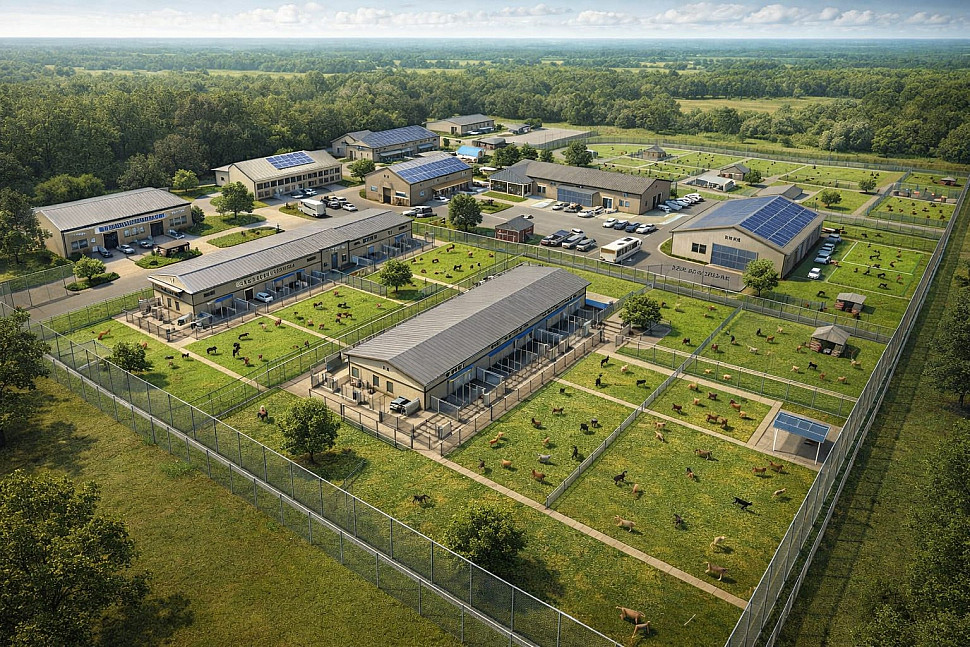
PROJECT OVERVIEW
Project Name: 2,000-Animal Rescue & Care Campus
Location: Long Island, NY (rural / agricultural zoning)
Capacity: Up to 2,000 animals total
- 1,000 rescue animals (dogs + cats mix)
- 1,000 paid boarding animals for pet owners requiring temporary care
Model: Secured open-yard campus + indoor climate-controlled rescue and boarding facilities
LAND REQUIREMENT
To safely support a 2,000-animal campus, the project will require:
- 20–30 acres minimum
- Agricultural / Industrial zoning
- Distance from residential clusters
- Suitable access for utilities, parking, and service traffic
Estimated Land Cost (Suffolk County):
$75,000–$200,000 per acre
25 acres average → $1.9M–$5M
Estimated land acquisition:
$2.5M–$6M
CONSTRUCTION COST ESTIMATE
This project cannot be built with simple sheds or temporary structures. It requires:
- Climate-controlled kennel buildings
- Dedicated cat housing buildings
- Quarantine and isolation units
- Veterinary clinic / treatment center
- Administrative building
- Storage and food warehouse
- Boarding kennel buildings
- Pet daycare / grooming facilities
- Waste management system
- Security and fencing
- Drainage and stormwater systems
Approximate square footage:
140,000–180,000 sq ft total
Construction cost in Long Island:
$250–$450 per sq ft (commercial animal-care grade facility)
160,000 sq ft × $350 average = $56,000,000
Conservative construction range:
$42M–$65M
INFRASTRUCTURE COSTS
- 8 ft perimeter fencing (high security): $700K–$1.5M
- Internal fencing, yards, and circulation zones: $1M–$2M
- Parking + driveway + service access roads: $700K–$1.2M
- Utilities (water, septic, electric upgrades): $2M–$4M
- Solar optional: $1M–$1.5M
Infrastructure total:
$5.4M–$10.2M
EQUIPMENT & SETUP
- Kennels & enclosures: $2M–$4M
- Veterinary equipment: $1M–$2M
- Office equipment: $200K–$300K
- Security system: $300K–$600K
- Boarding equipment / pet suites / daycare systems: $1M–$2M
- Transport vans (3–5): $250K–$500K
Equipment total:
$4.75M–$9.4M
TOTAL CAPITAL COST
| Category | Estimated Range |
|---|---|
| Land | $2.5M–$6M |
| Construction | $42M–$65M |
| Infrastructure | $5.4M–$10.2M |
| Equipment | $4.75M–$9.4M |
| Soft Costs / Professional Fees / Contingency | $8M–$12M |
TOTAL PROJECT ESTIMATE:
$62.65M – $102.6M
Realistic mid-range:
$75M–$85M
ANNUAL OPERATING COSTS
Now the serious part.
Staff (minimum)
- Executive Director
- Operations Manager
- Veterinary team (3–5 vets)
- 35–60 animal care staff
- Boarding operations staff
- Admin & fundraising staff
- Maintenance & facility staff
Estimated payroll:
$4.5M–$7M annually
Food
Average $1.50–$2.50 per animal per day
2,000 animals × $2/day × 365 = $1,460,000 annually
Veterinary care
Vaccines, surgeries, emergency care, treatment, quarantine support
$1M–$2M annually
Utilities
Heating (NY winters), electric, water
$800K–$1.5M annually
Insurance
Liability + property + workers comp
$400K–$800K annually
Miscellaneous
Supplies, fuel, repairs, cleaning, waste management, operations
$1M–$2M annually
TOTAL ANNUAL OPERATING BUDGET
$9.2M – $14.8M per year
Safe projection:
$10M–$12M annually
REVENUE SUPPORT MODEL
Unlike a traditional rescue-only shelter, this campus includes a 1,000-capacity paid boarding business designed to help support long-term operations.
Potential revenue sources include:
- Pet boarding
- Daycare
- Grooming
- Training
- Premium pet suites
- Veterinary support services
- Retail / pet supply sales
This hybrid model creates a more sustainable long-term structure by combining nonprofit rescue operations with revenue-generating animal care services.
FUNDRAISING REALITY
To sustain a project of this scale, the organization will need:
- Major donors ($1M+ gifts)
- Corporate sponsorship
- Foundation grants
- Capital campaign fundraising
- Revenue from boarding operations
- Endowment development
- Strong marketing and donor infrastructure
Without a phased rollout and diversified support structure, the project would be financially unstable.
STRATEGIC TRUTH
Right now, the organization is in an early development stage and is still building its donor base, operating infrastructure, partnerships, and project execution capacity.
Launching a $75M+ campus immediately would not be financially credible without a phased strategy.
PROFESSIONAL RECOMMENDATION
If the long-term vision is a 2,000-animal campus, a phased approach is the most credible path:
Phase 1 – Master Plan / Site Control / Pilot Capacity
Budget: $500K–$1M
Phase 2 – Initial Rescue + Small Boarding Operations
Budget: $5M–$10M
Phase 3 – Expanded Rescue + Boarding Infrastructure
Budget: $15M–$25M
Phase 4 – Full 2,000-Animal Campus Completion
Budget: $50M+ total development scale
0 comments